Slow Poison: The Exact Chemicals Leaking From Your Abandoned Car and Where They End Up
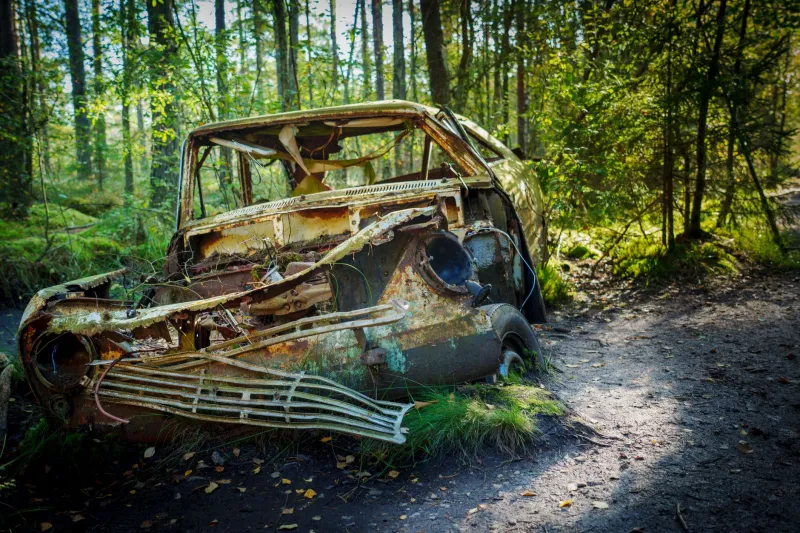
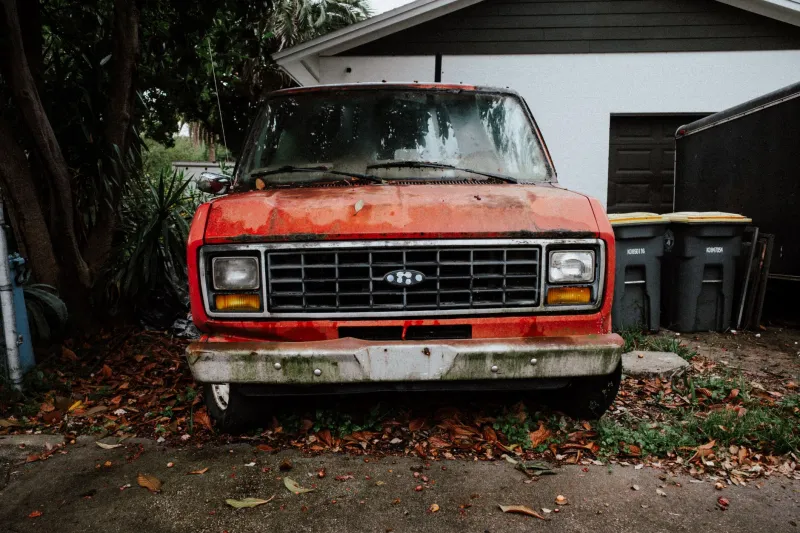
There's a tempting logic to leaving an old car where it sits. It's not hurting anything, right? It's just metal and rubber. It'll wait.
Except it won't wait — not passively, anyway. A deteriorating vehicle is an active system of chemical reactions happening in slow motion. Seals crack. Reservoirs corrode. Plastics degrade. And as each of those things happens, the fluids and compounds that kept your car running begin migrating somewhere else: into your soil, your groundwater, and eventually the broader environment around you.
This isn't alarmism. It's chemistry. And understanding exactly what's happening under that hood — and beneath those tires — makes a compelling case for why proper junk car disposal isn't just a nice-to-have. It's the responsible choice.
The Battery: A Slow-Release Acid Problem
Conventional lead-acid batteries — the kind found in the vast majority of gas-powered vehicles — contain sulfuric acid and lead plates. In a functioning car, these are sealed and contained. In an abandoned one, the casing eventually cracks from temperature fluctuations, physical stress, and simple age.
When that casing fails, sulfuric acid leaches into the surrounding soil. Lead, classified by the EPA as a hazardous substance, follows. Lead contamination in soil is persistent — it doesn't break down naturally over time the way organic matter does. It accumulates. And in residential settings, that contamination can reach levels that are dangerous for children who play in the yard and for vegetable gardens that draw from contaminated soil.
Electric and hybrid vehicles introduce a different concern: lithium-ion battery packs. These are larger, more chemically complex, and contain lithium, cobalt, manganese, and nickel. Degraded lithium-ion cells can also release hydrofluoric acid — a compound that's acutely toxic to tissue and highly mobile in groundwater. The infrastructure for safely recycling these batteries is still developing, which makes improper disposal of EV batteries an emerging environmental challenge that proper junk car services are equipped to handle.
Antifreeze: Sweet, Colorful, and Lethal
Ethylene glycol — the active ingredient in most automotive antifreeze — has a deceptively pleasant smell and a slightly sweet taste. That's exactly what makes it so dangerous.
Animals, including dogs, cats, and wildlife, are attracted to antifreeze puddles and will drink from them. A relatively small amount — as little as a teaspoon — can be fatal to a cat. Dogs require a slightly larger dose but are equally at risk. The compound causes acute kidney failure by forming calcium oxalate crystals that block renal tubules.
For humans and groundwater systems, the concern is different but still serious. Ethylene glycol is water-soluble, meaning it moves easily through soil and into groundwater. While it does eventually biodegrade, the process consumes oxygen in the water — a process called biological oxygen demand — which can harm aquatic ecosystems in waterways fed by contaminated groundwater.
An aging coolant reservoir or a cracked radiator hose doesn't contain antifreeze indefinitely. It drips, pools, and eventually soaks in.
Transmission Fluid and Engine Oil: The Sludge That Stays
Motor oil and transmission fluid both contain hydrocarbons, heavy metals, and chemical additives that accumulate in the oil as it ages. Used motor oil is actually classified as a hazardous waste in most US states for this reason — it contains benzene, lead, zinc, and arsenic at concentrations that exceed safe limits.
When these fluids leak from a deteriorating vehicle, they don't evaporate. They bind to soil particles in a process that effectively seals off the ground, reducing its permeability and killing the microbial communities that make soil productive. One quart of motor oil can contaminate up to 250,000 gallons of drinking water according to EPA estimates.
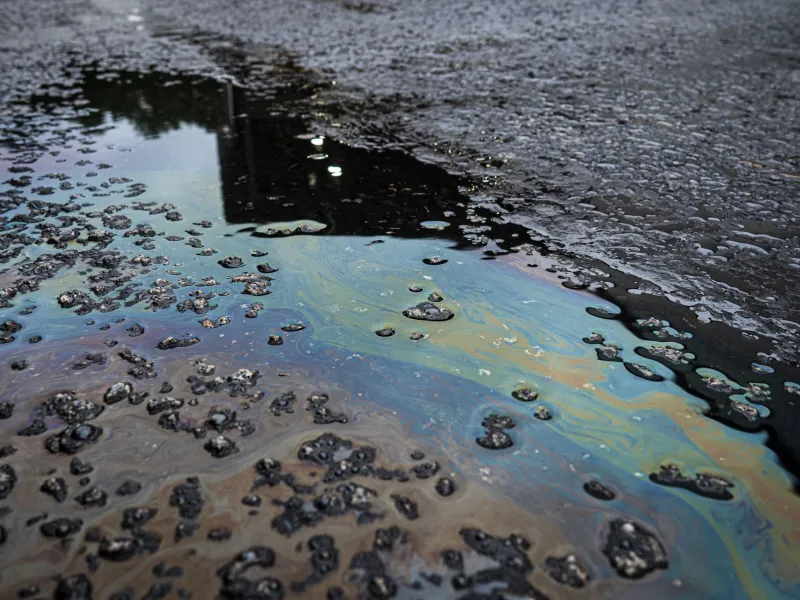
The visual evidence — dark staining on concrete or soil — is just the surface layer. The real contamination goes deeper, moving with rainwater through the soil profile toward aquifers and water tables below.
Refrigerant: The Invisible Atmospheric Problem
Vehicle air conditioning systems contain refrigerant — historically R-12 (Freon) in older vehicles, and R-134a or the newer HFO-1234yf in more recent models. When an AC system sits unused and degrades, seals deteriorate and refrigerant slowly escapes into the atmosphere.
R-12 is a chlorofluorocarbon (CFC) with ozone-depleting properties roughly 10,600 times more potent than CO₂ on a pound-for-pound basis. While its use in new vehicles was phased out in the US after 1995, millions of pre-1996 vehicles still contain it. R-134a, the replacement, doesn't deplete ozone but has a global warming potential about 1,430 times that of CO₂.
These aren't abstract numbers. They represent real atmospheric impact from what amounts to a slow leak out of a rubber hose in a car nobody's driving.
Brake Fluid and Power Steering Fluid: The Overlooked Leakers
Brake fluid is hygroscopic — it absorbs moisture from the air — and over time it degrades, becoming more acidic. It contains glycol ethers, which are classified as hazardous to aquatic life and can cause reproductive toxicity in humans at sufficient exposure levels.
Power steering fluid, typically petroleum-based, carries the same hydrocarbon contamination concerns as motor oil. Neither of these fluids gets much attention in conversations about vehicle contamination, but both are present in a deteriorating car and both will eventually find their way out.
What Professional Removal Actually Does
A licensed junk car removal service doesn't just haul the vehicle away. The first step at any reputable recycling facility is depollution — the systematic draining and collection of every fluid in the vehicle before any part is disassembled or crushed.
This includes coolant, motor oil, transmission fluid, brake fluid, power steering fluid, fuel, and refrigerant. Each is collected separately, stored properly, and processed through licensed channels. Batteries — both conventional and lithium-ion — are removed and sent to certified battery recyclers.
The EPA and most state environmental agencies have specific regulations governing this process, and reputable auto recyclers operate under those rules. When you hand a vehicle over to a service like WM Junk Cars, you're not just getting rid of a car. You're ensuring that everything inside it is handled in a way that doesn't end up in the ground under your house or downstream in your community's water supply.
The Takeaway
Leaving a junk car isn't a neutral act. It's a slow-motion chemical event with real consequences for soil, groundwater, wildlife, and the people who live around it. The science isn't complicated — it's just not something most people think about when they're looking at what seems like a harmless heap of metal in the driveway.
Now you know what's actually in there. And now you know why getting it removed properly is the choice that makes sense — not just for your yard, but for the environment around it.