Your Driveway Is Slowly Poisoning the Ground Beneath It — Here's What That Dead Car Is Really Doing
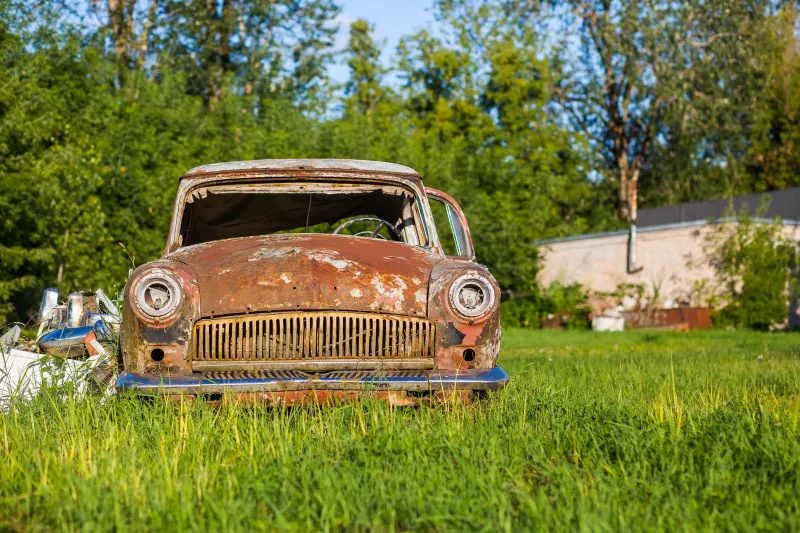
At first glance, a broken-down car just sitting in the driveway seems like more of an eyesore than an environmental hazard. Maybe it's been there for a year, maybe longer. It's not running, so it's not burning gas, right? That's got to count for something.
Not exactly.
A non-functional vehicle is actually one of the sneakier sources of environmental contamination in residential neighborhoods across the US. It's not dramatic — there's no smoke, no explosion, no obvious warning sign. It's quiet, gradual, and by the time most people notice, the damage has already been done. Let's break down what's really going on under that rusting hood.
The Slow Leak Problem Nobody Talks About
Every car on the road — or parked permanently in your yard — contains a cocktail of fluids that are genuinely toxic to the environment. We're talking engine oil, transmission fluid, power steering fluid, brake fluid, coolant (antifreeze), and battery acid. When a car is running and well-maintained, these fluids stay where they belong. But when a vehicle sits idle for months or years, seals dry out, hoses crack, and gaskets fail. And then those fluids start going somewhere they absolutely shouldn't.
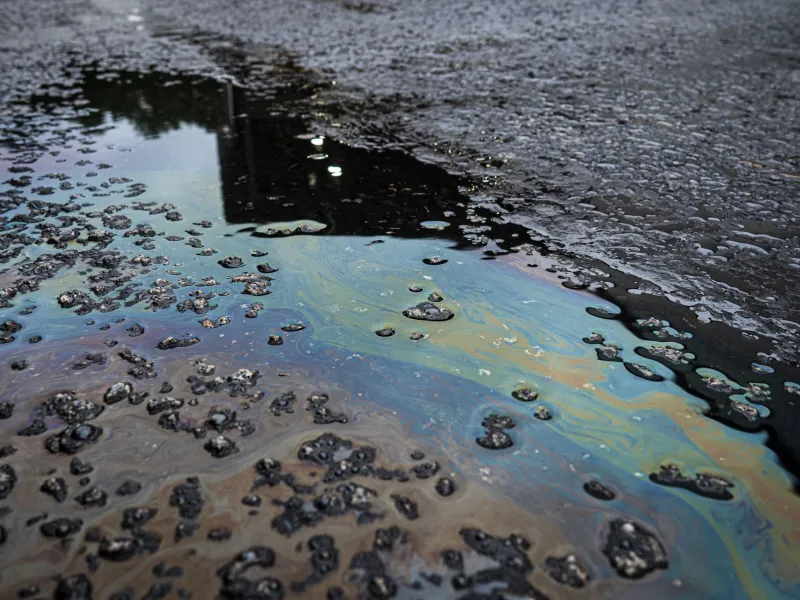
Engine oil is probably the most common offender. A single quart of used motor oil can contaminate up to 250,000 gallons of drinking water, according to the EPA. One quart. Now imagine a vehicle that's been slowly dripping oil onto a concrete driveway or a dirt patch for eighteen months. That oil doesn't just sit on the surface — it works its way through soil, into groundwater, and eventually into local water supplies.
Coolant is another big one. Antifreeze contains ethylene glycol, which has a sweet taste that's dangerously attractive to pets and wildlife. It's also highly toxic to the kidneys of mammals — including humans. Older vehicles especially tend to develop coolant leaks as rubber hoses deteriorate over time.
What Happens When It Rains
Here's where things get worse. Rainwater acts as a transport system. When it falls on a driveway where fluids have pooled or soaked in, it picks up those contaminants and carries them — into storm drains, nearby soil, streams, and groundwater. In many parts of the US, storm drains connect directly to local waterways without any filtration. That means the oil dripping from your old Chevy could end up in a creek a few blocks away.
This isn't hypothetical. The EPA estimates that urban runoff — which includes vehicle fluid contamination — is one of the leading causes of water pollution in the country. Residential driveways are a significant contributor to that number, especially in neighborhoods where vehicle abandonment is common.
And if your driveway isn't paved? If it's gravel or dirt? The contamination moves even faster. There's no concrete barrier slowing things down. Fluids go straight into the ground.
The Battery Situation Is Particularly Bad
Car batteries contain sulfuric acid and lead — two substances that are seriously bad news for soil and water quality. When a battery sits in a vehicle that's exposed to temperature swings over multiple seasons, the casing can crack or swell. Once that happens, acid starts leaching out.
Lead contamination in soil is a long-term problem. It doesn't break down. It accumulates. And it's associated with neurological damage in children, which is why lead paint and lead pipes have been such major public health concerns over the decades. A leaking car battery is a smaller-scale version of the same issue — but it's happening right in your backyard.
The Rust Factor and Airborne Particles
Fluid leaks aren't the only environmental concern. As a vehicle rusts and deteriorates, it releases particulate matter into the surrounding environment. Older cars especially may contain materials — certain paints, undercoating compounds, and metal alloys — that break down into forms that aren't great to breathe or ingest.
Rust itself isn't acutely toxic, but the process of metal degradation can release trace amounts of heavy metals depending on the vehicle's age and construction. Over years, these particles settle into soil and can be disturbed by wind, foot traffic, or lawn maintenance.
The 'Emergency Disposal' Carbon Cost
Here's an angle most people never consider: if a vehicle sits long enough in a deteriorated state, disposing of it eventually becomes more resource-intensive than if it had been handled promptly. Severely rusted vehicles are harder to dismantle efficiently. Fluids that have fully degraded or mixed together require more complex handling. Parts that could have been refurbished and resold are now worthless.
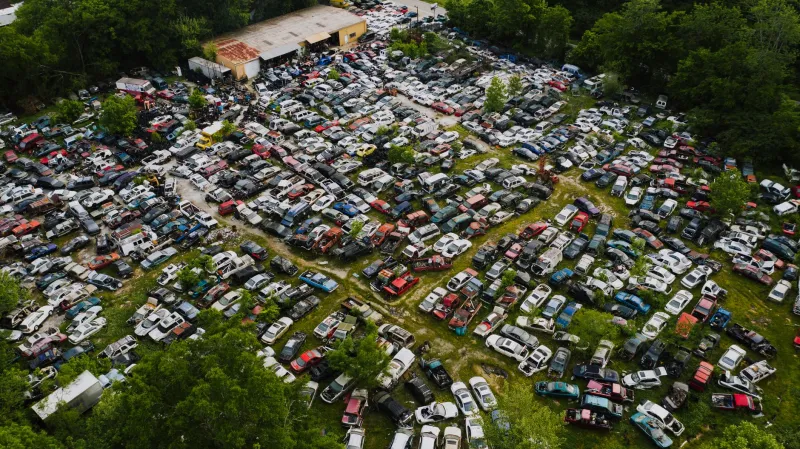
When a car reaches that point of total deterioration, it often ends up going through a less efficient recycling stream — or worse, gets illegally dumped, which compounds the environmental damage significantly. Illegal vehicle dumping is a real problem in rural areas and on the edges of cities, and it's almost always the end result of a vehicle that sat around too long without a plan.
Proper, timely junk car removal short-circuits all of that. A vehicle that gets picked up and processed through a legitimate auto recycler is handled in a controlled environment where fluids are properly drained and disposed of, usable parts are pulled and resold, and the remaining metal is shredded and fed back into the manufacturing supply chain. Steel recycling, in particular, is dramatically more energy-efficient than producing new steel from raw ore — reducing greenhouse gas emissions in the process.
What You Can Actually Do About It
The good news is that solving this problem is genuinely easy. If you've got a non-running or barely-running vehicle taking up space, junk car removal services will come to you — usually at no cost — and haul it away. You don't need to figure out how to transport a car that won't start. You don't need to negotiate with a scrapyard or understand the recycling process. You just need to make the call.
In most cases, you'll also walk away with some cash. Even vehicles in rough shape have value in their metal and salvageable components. So you're not just doing the environment a favor — you're getting paid to do it.
If you're not sure whether your vehicle qualifies, the answer is almost certainly yes. Junk car buyers take vehicles in all conditions: no title in some states, no wheels, flood damage, fire damage, you name it. The threshold for "too far gone" is much higher than most people assume.
The Bottom Line
A broken car in your driveway isn't a neutral presence. It's an active source of soil contamination, a potential groundwater hazard, and a long-term environmental liability — one that gets worse the longer it sits. The most responsible thing you can do, both for your property and for the surrounding environment, is get it removed through a legitimate recycling channel.
It's one of those rare situations where doing the right thing and doing the convenient thing are exactly the same action. Don't let inertia make the decision for you — and don't let that old car keep quietly doing damage in the meantime.