Your Junker Is Worth More Than You Think — Here's What Buyers Are Really After
Most people look at a broken-down, barely-running vehicle and see a headache. Junk car buyers look at the same thing and see opportunity. That gap in perspective is exactly why so many vehicle owners leave money on the table when it's time to get rid of an old clunker.
Whether your car died on the highway last week or has been slowly sinking into your yard for the past three years, there's a real market for it — and understanding what drives that market helps you get a fair deal. Let's break down what auto recyclers and junk car buyers are actually looking for when they make you an offer.
The Catalytic Converter: A Little Part Worth a Lot
If there's one component that consistently surprises car owners, it's the catalytic converter. This emissions-control device — typically a small, cylindrical part tucked into your exhaust system — contains trace amounts of platinum, palladium, and rhodium. These are genuine precious metals, and their market value fluctuates just like gold or silver.
Depending on the make and model of your vehicle, a catalytic converter can be worth anywhere from $50 to several hundred dollars on its own. Hybrid vehicles, which often run their engines less frequently, tend to have converters in better condition and are particularly valuable. If your car still has its original catalytic converter intact, that's a meaningful boost to your overall offer.
Aluminum: The Lightweight Metal Everyone Wants
Over the past few decades, automakers have leaned heavily on aluminum to reduce vehicle weight and improve fuel efficiency. That shift has been great news for auto recyclers. Aluminum is far more valuable per pound than steel, and it shows up in a surprising number of places — engine blocks, cylinder heads, wheels, transmission housings, and body panels on newer models.
When a junk car buyer evaluates your vehicle, they're mentally cataloging how much aluminum is in play. A truck with aluminum wheels and an aluminum engine block is going to fetch a higher scrap price than an older steel-heavy sedan, even if both vehicles are in similar overall condition. It's worth knowing what your car is made of before you negotiate.
Engine Blocks and Transmissions: The Big-Ticket Internals
Not every junk car has a blown engine or a dead transmission. Sometimes vehicles are scrapped for reasons that have nothing to do with the drivetrain — a flood, a frame hit, an expired registration on a car that's otherwise mechanically sound. In those cases, the engine and transmission become extremely valuable components.
Even in cases where an engine isn't running, the core materials still hold worth. Cast iron engine blocks are heavy and carry solid scrap value. Transmissions, with their mix of aluminum housings and steel internals, are similarly prized. Rebuilders and parts resellers actively seek out low-mileage or rebuildable units, which can push the value of your vehicle well above basic scrap metal rates.
Reusable Body Parts and Interior Components
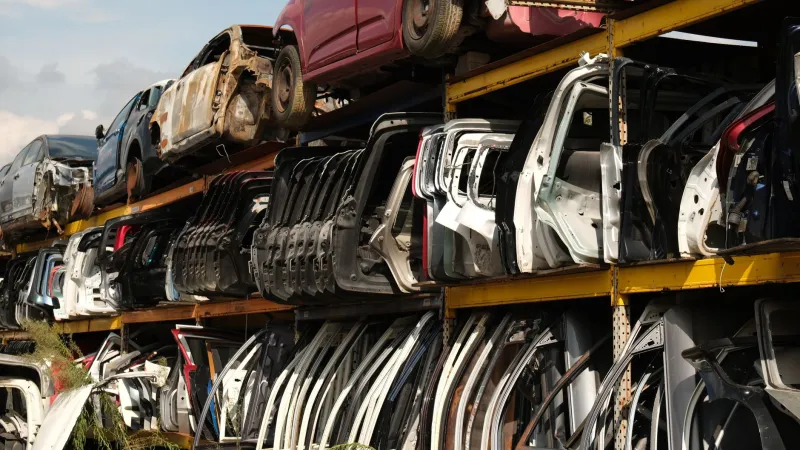
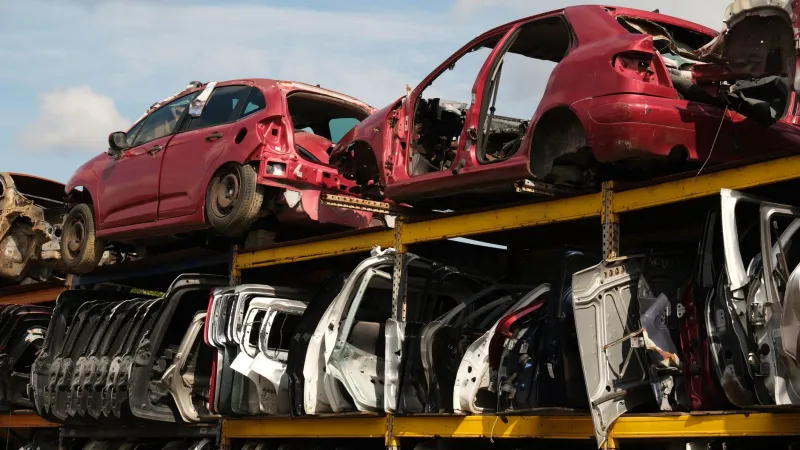
Auto recyclers don't just shred everything that comes through the gate. Before a vehicle gets crushed, skilled dismantlers go through it systematically, pulling off parts that can be cleaned up and resold. Doors, hoods, fenders, mirrors, headlights, taillights, seats, dashboards — all of these have a secondary market among people doing repairs on similar vehicles.
If your car's body is relatively intact even though the engine is toast, that matters. A 2015 Honda Accord with a dead motor but clean body panels is going to generate more salvageable parts than a vehicle that's been in a rollover. Buyers factor in the resale potential of these components when they build your offer.
The Scrap Steel Baseline
At the end of the day, every vehicle has a floor value based on its weight in steel. Scrap metal prices shift with commodity markets, but steel is always worth something. A full-size truck or SUV, which can weigh 4,000 to 6,000 pounds, generates meaningful tonnage even after fluids and non-metal components are removed.
This baseline is why even a completely stripped, burned-out shell still has some cash value. It's not going to make you rich, but it's real money — and it's money you're leaving behind if you just abandon the vehicle or pay someone to haul it away.
How to Get the Most Out of Your Offer
Knowing what buyers look for gives you a little leverage. Here are a few practical tips:
- Be honest about what's there. If the catalytic converter was stolen — a genuinely common problem — let the buyer know upfront. Trying to hide missing components usually backfires.
- Know your vehicle's year, make, model, and mileage. These details directly affect how buyers calculate parts resale potential and scrap value.
- Don't strip it yourself unless you know what you're doing. Pulling off parts incorrectly can damage other components and actually reduce your offer.
- Get multiple quotes. Services like WM Junk Cars make it easy to get a fast offer, and comparing a couple of options ensures you're not underselling.
The bottom line? Your clunker has layers of value that aren't obvious at first glance. Precious metals, aluminum, reusable parts, and solid steel all add up to a number that's probably higher than you'd guess. A quick call or online quote is all it takes to find out exactly what your vehicle is worth today.