The Last Road Trip: How a Junked Car Gets Dismantled, Recycled, and Reborn
Let's set the scene. A tow truck pulls into your driveway, hooks up that aging sedan you've been meaning to deal with for the past two years, and hauls it away. You've got cash in your pocket and one less eyesore in your yard. Easy enough. But have you ever wondered what happens to that car after it disappears around the corner?
The answer is a lot more interesting — and a lot more useful to the world — than most people expect. Auto recycling is one of the largest and most efficient recycling industries in the United States. Every year, roughly 12 to 15 million vehicles reach the end of their road in this country, and the vast majority of the material inside them gets recovered and put back to work. Here's how that process actually unfolds.
First Stop: The Salvage Yard
When a junk vehicle arrives at a licensed auto recycler, the first order of business is documentation. The title gets processed, the VIN gets logged, and the vehicle enters the facility's inventory system. From there, it moves to a fluid removal station — one of the most environmentally critical steps in the whole process.
Before anything else happens, trained technicians drain and collect every fluid in the vehicle: engine oil, transmission fluid, brake fluid, power steering fluid, coolant, and gasoline. These aren't just dumped — they're collected separately and sent to processors who recondition or properly dispose of them. The same goes for refrigerants in the air conditioning system, which require specialized equipment to capture safely. Getting this step right keeps hazardous chemicals out of the soil and groundwater.
Once the vehicle is drained, the real dismantling begins.
The Art of the Teardown
Experienced dismantlers approach a vehicle methodically, working through a mental checklist of components that have resale value in the used parts market. This is where your old car starts contributing to someone else's repair bill — in the best possible way.
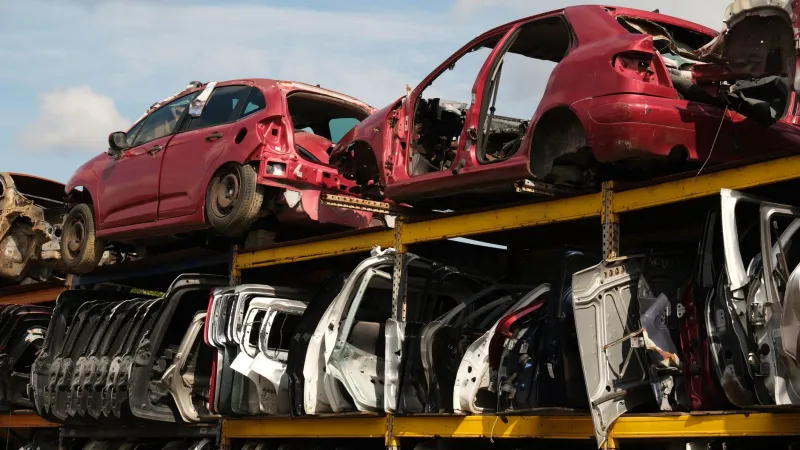
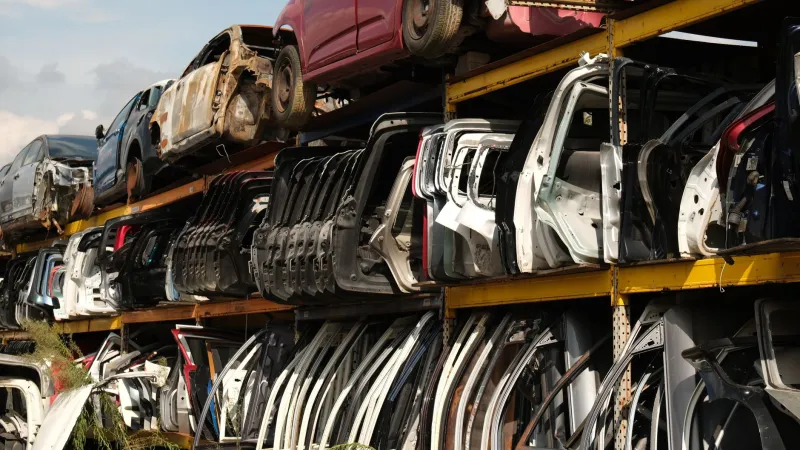
Usable parts get pulled carefully and inventoried: doors, hoods, fenders, bumpers, mirrors, lighting assemblies, seats, dashboards, radios, steering columns, engines, transmissions, alternators, starters, water pumps. High-demand items get cleaned up, tested where possible, and shelved for resale. The used auto parts market is enormous — millions of Americans every year choose quality salvage parts over new OEM components because the savings are substantial and the parts are often just as reliable.
Catalytic converters get removed and sent to precious metal processors, where the platinum, palladium, and rhodium inside are extracted and refined. Batteries go to lead recyclers. Tires get pulled and sent to tire recyclers, where they might be shredded into crumb rubber for playground surfaces, athletic tracks, or new tire production.
Into the Classroom: Auto Recycling Meets Education
Here's a part of the story that most people never hear about. Across the country, community colleges, vocational schools, and high school automotive programs regularly receive donated vehicles and components from salvage yards and auto recyclers.
Shop class students learn to disassemble and reassemble engines using real hardware. Future mechanics get hands-on time with actual transmissions, brake systems, and electrical components before they ever touch a paying customer's car. Welding students practice on genuine body panels. These donations are a meaningful pipeline from the recycling industry into workforce development — and your old car might literally become the teaching tool that trains the next generation of auto technicians.
Some larger recyclers have formal partnerships with technical schools, running donation programs that keep a steady flow of educational materials moving into classrooms. It's a side of auto recycling that doesn't get much attention, but it makes a real difference in communities where hands-on vocational training is hard to fund.
The Shredder: Where the Rest Becomes Raw Material
Once every recoverable part has been pulled, what's left is a bare metal shell — the hulk. This gets crushed flat by a hydraulic baler and loaded onto a truck headed for an industrial shredder facility.
Auto shredders are genuinely impressive machines. A large shredder can process a vehicle in seconds, reducing the entire hulk to fist-sized chunks of mixed metal. The output stream then runs through a sophisticated separation process: powerful magnets pull out ferrous steel, eddy current separators pull out non-ferrous metals like aluminum and copper, and air classifiers separate out foam and fabric remnants.
The sorted metals — steel, aluminum, copper, zinc — get baled and shipped to foundries and steel mills. American steel producers rely heavily on recycled scrap to feed their electric arc furnaces, where the metal gets melted down and cast into new steel. That steel might end up in the frame of a new pickup truck, in a refrigerator, in a bridge support, or in any number of manufactured products. The aluminum might find its way into new car parts, beverage cans, or building materials.
The recycled content in a brand-new American vehicle is substantial — typically around 25% of the steel and a significant portion of other metals come from recycled sources. In a very real sense, the cars being built today are partly made from the cars that came before them.
The Environmental Math
Auto recycling keeps an enormous amount of material out of landfills and reduces the demand for newly mined raw materials. Producing steel from recycled scrap uses roughly 75% less energy than producing it from iron ore. Recycled aluminum requires about 95% less energy to process than primary aluminum production.
When you factor in the fluid recovery, the parts reuse, and the metal recycling, a properly processed junk vehicle sends very little to the landfill — estimates typically put it at less than 25% of the vehicle's total weight, and the industry is actively working to reduce that figure further.
Your Car's Legacy
So when you call WM Junk Cars and arrange a pickup, you're not just clearing your driveway. You're feeding a recycling system that touches manufacturing, education, environmental protection, and the broader economy. That old clunker you've been staring at for months has a surprisingly rich second act ahead of it.
The tow truck rolls away, and the journey begins. Not bad for a car that couldn't make it out of the driveway under its own power.