Scrap Gold: The Surprising Parts Inside Your Junk Car That Buyers Are Willing to Pay For
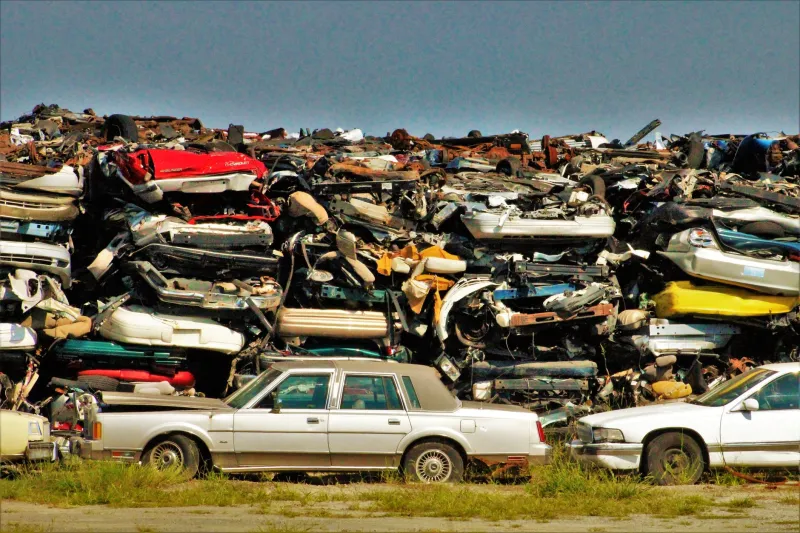
Most people look at a dead car and see a headache. Junk car buyers look at the same vehicle and see a parts inventory. The gap between those two perspectives is exactly where money gets left on the table — your money.
Before you accept the first cash offer that comes your way, it helps to understand what makes a junk car valuable even when the engine is completely gone. The auto recycling market is more sophisticated than most sellers realize, and the prices buyers quote aren't random. They're calculated based on specific components, current scrap metal prices, and regional demand. Here's a breakdown of what's actually worth something inside that clunker.
Catalytic Converters: The Crown Jewel of Junk Car Parts
If you've heard anything about catalytic converter theft in recent years, you already know these components are worth serious cash. They contain platinum, palladium, and rhodium — precious metals that fluctuate in price but consistently command premium rates from recyclers.
The value varies significantly by make and model. Converters from trucks and SUVs tend to be larger and contain more precious metal content than those from compact cars. Certain Toyota, Honda, and Ford models are particularly sought after. If your vehicle still has its original catalytic converter intact, that alone can account for a substantial portion of your junk car's total offer price.
Buyers will almost always factor converter value into their quote, but knowing this going in gives you a baseline for evaluating whether an offer is fair.
Copper Wiring: The Invisible Commodity
Copper prices have been climbing steadily, which means the wiring harness running through your vehicle is more valuable than it used to be. Modern cars contain anywhere from 50 to over 100 feet of copper wiring depending on how electronically complex they are. Luxury vehicles and hybrids tend to carry the most.
Recyclers strip and sort this copper for resale to metal processors. It's labor-intensive work, which is why buyers factor the copper yield into their offers rather than advertising it as a line item. Understanding this helps explain why two seemingly similar cars can get very different quotes — the one loaded with electronic features has more copper running through it.
Aluminum Components: Lightweight and Lucrative
Aluminum has become one of the most sought-after scrap metals because it's lightweight, durable, and infinitely recyclable. In vehicles, it shows up in wheels, engine blocks, transmission housings, radiators, and increasingly in body panels.
Model years from the mid-2000s onward tend to have more aluminum content as automakers shifted toward weight reduction for fuel efficiency. Trucks like the Ford F-150, which moved to an aluminum body in 2015, are a prime example of vehicles that carry strong scrap aluminum value even in non-running condition.
When a junk car buyer weighs your vehicle, they're doing a rough mental calculation of its aluminum yield alongside steel. The higher the aluminum content, the better the number they're working with.
Airbags: An Overlooked High-Value Component
Undeployed airbags are surprisingly valuable in the used auto parts market. Replacement airbags from dealerships can cost $1,000 or more, which means salvage yards can sell working units for a fraction of that price and still profit handsomely.
If your car was in a minor accident that didn't trigger airbag deployment, or if it's simply been sitting without ever being in a crash, those airbags are worth real money. Buyers in the recycling industry know this. The caveat is that airbag modules have a shelf life and must meet safety standards — but for vehicles that are 10 years old or newer, undeployed units often have solid resale value.
Why Certain Model Years Command Premium Part Prices
Not all junk cars are created equal when it comes to parts demand. The used auto parts market runs on supply and availability — the more of a particular vehicle on the road, the higher the demand for its replacement parts.
Toyota Camrys, Honda Civics, Ford F-150s, and Chevy Silverados are perennial favorites in the recycling world because millions of them are still being driven. When one of those vehicles needs a door panel, a headlight assembly, or a transmission, there's a ready buyer. Salvage yards prioritize acquiring these models because the parts move quickly.
Vehicles from 2005 to 2015 often hit a sweet spot — old enough to be in the junk car price range but recent enough that their parts are still in demand and haven't been discontinued. Rare or obscure models, on the other hand, can actually fetch lower offers because the parts market is thin.
How This Knowledge Helps You Negotiate
You don't need to become an expert in scrap metal pricing to use this information effectively. What you need is a general sense of what your vehicle contains so you can ask informed questions.
When a buyer calls with a quote, it's completely reasonable to ask how they arrived at the number. Does it account for the catalytic converter? What's their current scrap rate? Are they factoring in the aluminum wheels?
Most reputable junk car buyers — including services like WM Junk Cars — will be straightforward about their pricing. Getting multiple quotes is always smart, and knowing what's driving those numbers helps you evaluate them side by side rather than just picking the highest figure at random.
A car that won't run isn't a car anymore — it's a collection of raw materials and usable parts. The more you understand what's in that collection, the better positioned you are to make sure you're getting a fair deal when it's time to let it go.