That 'Someday' Car in Your Driveway Is Costing You More Than You Think
The 'I'll Deal With It Later' Tax Is Real
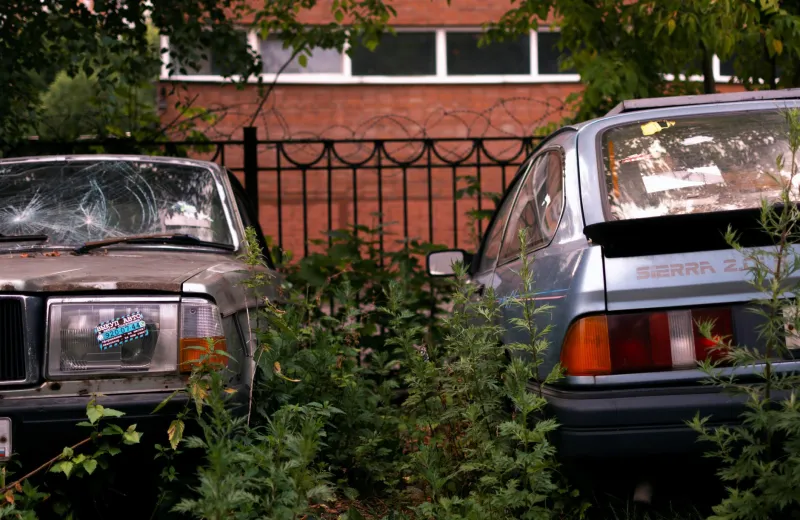
We've all been there. The old Chevy Cavalier sits in the driveway, hasn't started since last Thanksgiving, and every time you walk past it you think, someday I'll figure that out. Maybe you'll fix it up. Maybe you'll sell it privately. Maybe your cousin will take it off your hands.
But here's the thing nobody talks about: that "someday" car isn't just sitting there doing nothing. It's actively pulling money out of your pocket, month after month, while you wait for the perfect moment that never quite arrives.
Let's break down exactly what holding onto a clunker is costing you — in real dollars.
Insurance: Paying for a Car That Doesn't Move
This one surprises a lot of people. Even if a vehicle isn't drivable, many states still require you to carry at least minimum liability coverage to keep it registered. And if you've got a loan on it, your lender almost certainly requires full coverage.
The national average for full-coverage auto insurance runs somewhere around $1,700 to $2,000 per year, depending on your state, driving history, and the vehicle itself. Even a stripped-down liability-only policy on a clunker can run $400 to $800 annually.
Let's say you've been putting off dealing with that dead car for two years. That's potentially $800 to $1,600 in insurance premiums — paid on a vehicle that hasn't left your driveway. For a car you might be able to junk for $300 to $700 in cash today.
Some insurers do offer "storage" or "comprehensive-only" policies for vehicles you're not driving, which can lower costs somewhat. But you're still paying. Every. Single. Month.
Registration Fees: The Annual Reminder You Keep Ignoring
Depending on your state, annual vehicle registration can range from as low as $30 in states like Arizona to well over $200 in places like California or New York. Most people land somewhere in the $75 to $150 per year range.
Again — that's money out of your pocket for a car that's going nowhere. Over three years of procrastination, you're looking at $225 to $450 in registration fees alone, just to keep a non-running vehicle technically "legal" on paper.
And if you let the registration lapse? Now you've got a different problem. An unregistered vehicle parked on a public street can result in fines or even towing by your city or county — and you'll be paying them to tow it instead of getting paid to have it removed.
Storage Costs: Even Your Own Driveway Isn't Free
If the car is sitting in your own driveway or yard, you might not think of it as a storage cost. But consider what that space is actually worth.
If you're renting a home and you could be using that parking spot for a vehicle you actually drive — or subletting it to a neighbor — that space has real value. Depending on your city, a single parking space can rent for $50 to $300 per month. In dense urban areas like Chicago, Boston, or Los Angeles, that number climbs even higher.
And if you are paying for a storage unit, garage rental, or even a spot in a lot to keep a non-functional vehicle? Let's be blunt: that's money being lit on fire. Storage units run $75 to $200 per month on average. That's up to $2,400 per year to store something you're not using.
The HOA and Municipal Fine Scenario
Here's a scenario that plays out constantly across American suburbs: a homeowner parks a non-running car in their driveway, intending to fix it up. Six months later, the HOA sends a violation notice. Another few months pass. Now there's a fine.
HOA fines for junk vehicles or inoperable cars typically start at $50 to $100 per violation and can escalate quickly — sometimes to $500 or more if ignored. Some municipalities have similar ordinances and can issue citations through code enforcement.
Even if you don't have an HOA, many cities and counties classify vehicles that haven't moved in 30 to 72 hours as "abandoned" if they're parked on a public street, which can trigger towing and impound fees that run $150 to $500 or more just to retrieve your own car.
The Opportunity Cost Nobody Talks About
Beyond the hard costs, there's the money you're simply not making by waiting.
Junk car values fluctuate with the scrap metal market, but a typical non-running vehicle in average condition might fetch $200 to $800 from a reputable junk car buyer. Some vehicles — particularly trucks, SUVs, or cars with valuable parts — can bring significantly more.
Every month you wait is a month that vehicle is depreciating further, rusting more, and potentially losing parts to weather or theft. That $600 offer you could get today might be $400 in a year if the catalytic converter corrodes or the interior fills with mold.
Putting It All Together: A Real-World Example
Let's say you've got a 2008 Ford Focus that stopped running 18 months ago. You've been keeping it registered and insured, just in case.
Here's what that "just in case" has cost you:
- Insurance (18 months at $50/month): $900
- Registration (1.5 years at $120/year): $180
- Opportunity cost (could've sold for $500): $500
- Total loss: $1,580
And you still have the car. It's worth less now than it was 18 months ago. Meanwhile, you could have had $500 in your pocket — and saved nearly $1,100 in ongoing costs.
That's a $1,580 swing, just from waiting.
So What's the Move?
If you've got a non-running or rarely-used vehicle taking up space and draining your finances, the math is pretty clear: the longer you hold onto it, the more it costs you.
The good news? Getting rid of it doesn't have to be a hassle. A reputable junk car removal service — like WM Junk Cars — will come to you, handle the paperwork, tow the vehicle for free, and put cash in your hand. No negotiating with strangers on Craigslist, no trips to the DMV, no drama.
The "someday" car has been costing you money every day it sits there. Today's a pretty good day to finally do something about it.