What That Dead Car in Your Driveway Is Actually Costing Your Property — And What You Get Back When It's Gone

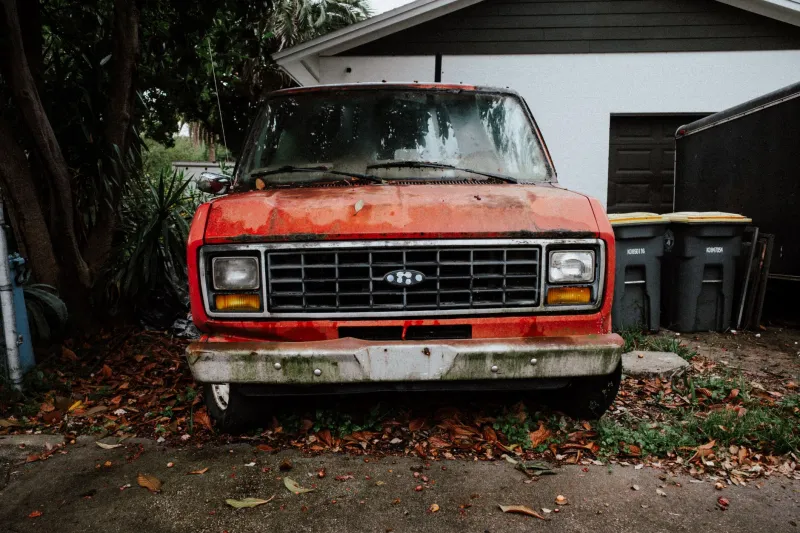
Let's be honest. That car has been sitting there for a while. Maybe it's been months. Maybe it's been long enough that you've stopped actually seeing it — it's just become part of the landscape, like the crack in the sidewalk or the overgrown shrub in the corner.
But here's the thing: just because you've tuned it out doesn't mean everyone else has. And more importantly, it doesn't mean it's not costing you in ways that don't show up in your checking account — at least not directly.
Removing a junk car isn't just about the cash you get. It's about everything you stop losing.
The Curb Appeal Problem Is More Expensive Than It Looks
Real estate professionals have been saying it for decades: first impressions are everything. A National Association of Realtors study found that good curb appeal can add anywhere from 7% to 14% to a home's perceived value. That's not a trivial number. On a $250,000 home, 7% is $17,500.
Now, no appraiser is going to write "dead Pontiac in driveway: minus $17,500" on their report. But they don't have to. Curb appeal affects perceived value, and perceived value affects actual offers. Buyers make decisions in the first 30 seconds of pulling up to a property. A deteriorating vehicle signals neglect — even if the house itself is immaculate.
If you're planning to sell your home in the next few years, removing that clunker is one of the cheapest, fastest improvements you can make. You're not renovating a kitchen. You're making a phone call.
The Parking Space You've Forgotten You're Missing
This one sounds simple, but sit with it for a second. How much is a parking space actually worth?
In urban and suburban areas across the US, the value of a dedicated parking spot varies wildly by location — but it's never zero. In Chicago, dedicated parking spaces in certain neighborhoods sell for $20,000 to $35,000. In Boston, they've sold for over $100,000. Even in mid-sized cities and suburbs, having an extra usable spot in a driveway adds measurable value to a property.
Beyond resale value, there's the practical day-to-day reality. If you've got a two-car driveway and one spot is occupied by a car that doesn't move, you're parking on the street. That means exposure to weather, theft risk, street cleaning tickets, and the daily minor annoyance of shuffling vehicles. Getting rid of the junk car gives you that space back immediately — no renovation, no waiting, no contractor.
Insurance You Might Not Have Thought to Cancel
If your dead car is still technically registered and insured, you're paying for coverage on a vehicle that provides zero transportation value. Even a minimal liability policy costs money every month. Comprehensive and collision on a non-runner is genuinely hard to justify.
Once you sell the vehicle and transfer the title, you can cancel that coverage. Depending on your policy, that could be $50 to $150 a month back in your pocket. Over a year, that's $600 to $1,800 — and that's before you factor in the cash you received for the car itself.
Call your insurance provider as soon as the title transfers. Most companies will pro-rate the refund for the unused portion of your policy period.
The HOA and Municipal Fine Factor
This one varies by location, but it's worth addressing. Many homeowners associations have explicit rules about inoperable vehicles on the property. Violations can generate fines that accumulate fast — often $50 to $100 per day after an initial warning period.
Similarly, municipalities have their own nuisance vehicle ordinances. Depending on where you live, an unregistered or non-operable vehicle left on private property can trigger code enforcement action. We've written about this before — the legal exposure is real and it sneaks up on people who assume their own driveway is their own business.
Removing the vehicle eliminates that risk entirely. No fines, no notices, no awkward conversations with neighbors who reported you.
The ROI Scenario, Broken Down
Let's build a quick picture. Say you've got a non-running car that's been sitting for eight months:
- Cash from junk car sale: $300–$800 (depending on vehicle, location, current scrap prices)
- Insurance savings (if applicable): $75/month × 8 months = $600
- Avoided HOA or code fines: $0–$500+ depending on your situation
- Curb appeal / property value uplift: hard to quantify precisely, but real
- Parking space reclaimed: immediate practical value, long-term property value contribution
Conservatively, the total return on that removal call — including the cash payment — can easily exceed $1,500 when you account for all the variables. And the upside on property value is a multiplier that kicks in if and when you sell.
The Part Nobody Talks About: Mental Load
There's a reason professional organizers and psychologists talk about the cognitive weight of clutter. Every time you pull into your driveway and see that dead car, your brain registers it. It's a small thing, but small things compound.
Homeowners who've cleared a long-sitting junk vehicle consistently describe a disproportionate sense of relief — not just satisfaction, but something closer to a weight lifting. The space looks bigger. The driveway feels functional again. The house looks cared for.
That psychological benefit doesn't show up in any financial model, but it's real, and it's immediate.
Making the Move
The process of removing a junk car through a service like WM Junk Cars is genuinely straightforward. You get a quote, schedule a pickup, sign the title over, and collect your payment — usually within 24 to 48 hours. Free towing is included, so there's no cost to the removal itself.
The question was never really can you do this. It was always just when. And based on everything that's been accumulating since that car stopped running, the answer is probably: sooner than you've been telling yourself.